Source: LCP.fr = https://lcp.fr/actualites/blocage-des-lycees-quelles-sont-les-revendications-des-eleves-442989
French High School Students Step Up Protests Over Deteriorating Study Conditions
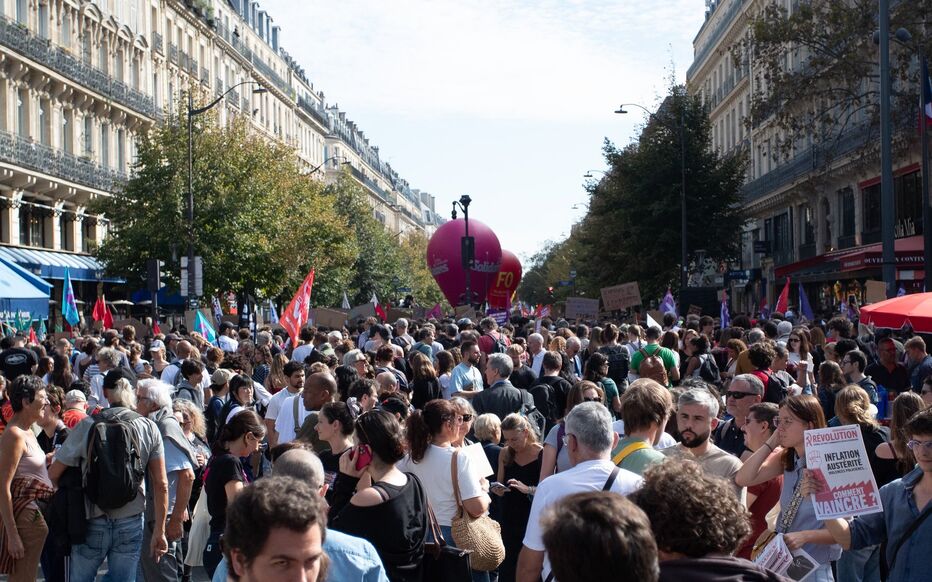
On Monday, 5 October, disruptions were reported at 589 high schools following two weeks of intense student mobilisation. On 6 October, trade unions called for increased pressure on the government through a “third act” of the protest movement. But what, exactly, are the students demanding through these school blockades?
Since 17 September, a wave of nationwide protest has swept through French high schools, with students blockading their schools to denounce what they consider unacceptable learning conditions. Their demands cover a range of issues. According to a letter circulated on 4 October, Prime Minister Sébastien Lecornu has asked his ministers to respond to them before the end of the month.
Here is an overview of the main grievances the government is being urged to address.
Staff shortages
The students’ demands primarily concern the human resources allocated to the national education system. They complain of overcrowded classrooms, often containing between 30 and 35 pupils, as well as prolonged teacher absences that go unfilled.
They also consider these conditions deeply unequal, varying considerably between suburban towns and schools in major metropolitan areas.
Overloaded timetables
The pace of school life is another major source of discontent. Students complain of having to get up too early and endure long school days, sometimes running from 8 a.m. to 6 p.m.
Gaps between lessons—hours during which no classes are scheduled—make these already lengthy days even more exhausting. The 2019 reform of the general academic curriculum, which introduced a choice of specialist subjects in the penultimate year of high school, has also been criticized for disrupting timetables.
Deteriorating school facilities
Students are also denouncing the poor state of school equipment and buildings, areas largely under the responsibility of regional authorities. They point to outdated equipment and furniture, as well as inadequate hygiene standards.
The heatwaves experienced this summer have further exposed poor insulation and schools’ lack of preparedness for extreme weather conditions.
An increasingly stressful university admissions process
Students have also criticized Parcoursup, France’s centralized higher education admissions platform. Its procedures are a significant source of anxiety about their future studies and careers, particularly because of the weight given to continuous assessment and the growing selectivity of higher education programmes.
A decline in learning conditions
For sociologists Alex Alber, Valérie Cohen, Nicolas Oppenchaim and Marion Valarcher, who published an opinion piece in Le Monde on 5 October, understanding the student protests requires looking first and foremost at the increasing strain of schoolwork.
Their research, based on a questionnaire completed by 7,000 students, highlights a deterioration in learning conditions. Respondents expressed dissatisfaction with excessive workloads, the amount of time they are required to spend at school and the poor condition of school facilities.
These factors, the researchers argue, have a tangible impact on students’ health, particularly their mental health and overall sense of well-being.
As tensions are expected to rise during Tuesday’s demonstrations, the Prime Minister’s office has stressed that students’ demands must be expressed “within a peaceful framework”. The government hopes the day’s protests will help restore a form of dissent that remains organized, lawful and democratic.

