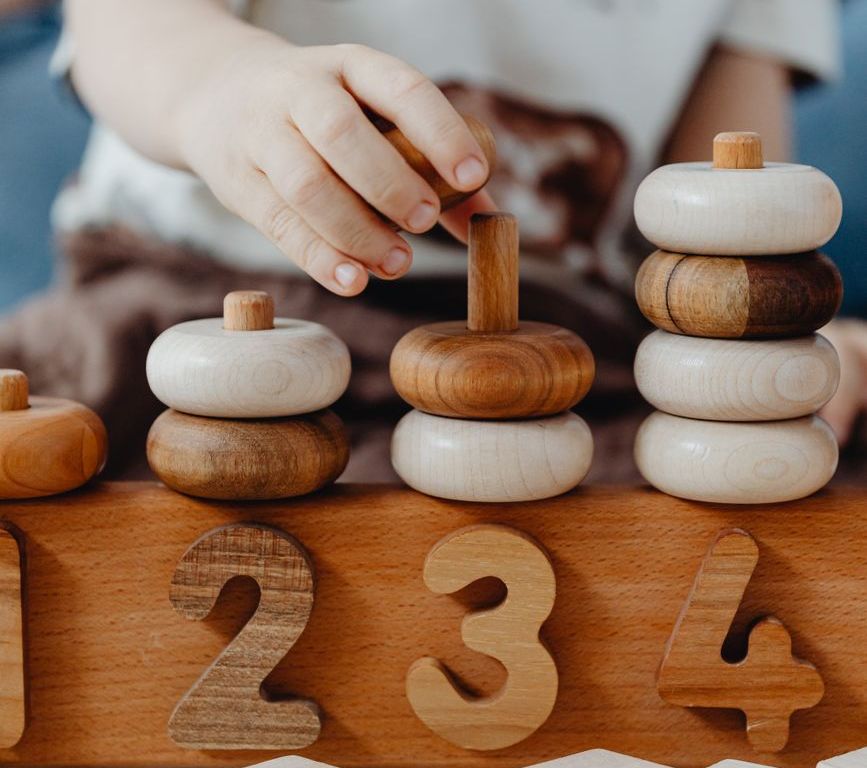
Learning numbers in French is one of the first things every beginner needs to master.
You’ll use French numbers when talking about your age, prices, dates, phone numbers, addresses, times, quantities and much more.
If you’re learning French from English, the numbers from 1 to 20 are relatively straightforward. Things become more interesting from 70 onwards, because French uses some mathematical combinations that are quite different from English!
Let’s start from the beginning.
Start Learning with a Native French Tutor

🇫🇷 French Numbers 1–20
Here are the first 20 numbers in French:
| Number | French |
|---|---|
| 1 | un |
| 2 | deux |
| 3 | trois |
| 4 | quatre |
| 5 | cinq |
| 6 | six |
| 7 | sept |
| 8 | huit |
| 9 | neuf |
| 10 | dix |
| 11 | onze |
| 12 | douze |
| 13 | treize |
| 14 | quatorze |
| 15 | quinze |
| 16 | seize |
| 17 | dix-sept |
| 18 | dix-huit |
| 19 | dix-neuf |
| 20 | vingt |
🗣️ A few pronunciation tips
Some French numbers can be pronounced quite differently from their spelling.
deux → roughly “duh”
trois → “trwah”
cinq → roughly “sank”
huit → roughly “weet”
douze → “dooz”
quinze → roughly “kanz”
vingt → roughly “van”
Don’t worry about making the pronunciation perfect immediately. The important thing is to listen and repeat.
Listen to the How we Pronounce the Numbers in French from a Native
🔢 Numbers 21–69
Once you reach 20, French becomes quite logical again.
20
vingt
21
vingt et un
Literally:
twenty and one
22–29
vingt-deux
vingt-trois
vingt-quatre
vingt-cinq
vingt-six
vingt-sept
vingt-huit
vingt-neuf
Then:
30
trente
31
trente et un
32
trente-deux
And the same pattern continues.
📊 The Tens in French
These are the numbers you need to memorise:
| Number | French |
| 20 | vingt |
| 30 | trente |
| 40 | quarante |
| 50 | cinquante |
| 60 | soixante |
| 70 | soixante-dix |
| 80 | quatre-vingts |
| 90 | quatre-vingt-dix |
| 100 | cent |
The first five are relatively easy:
vingt = 20
trente = 30
quarante = 40
cinquante = 50
soixante = 60
But then French takes a slightly different approach.
🧮 How to Say 70 in French
This is where English speakers often need a little practice.
French does not use a completely new word for 70.
Instead:
70 = 60 + 10
soixante-dix
Literally:
sixty-ten
Then:
71:
soixante et onze
72:
soixante-douze
73:
soixante-treize
And so on.
Try these:
74 → soixante-quatorze
75 → soixante-quinze
76 → soixante-seize
77 → soixante-dix-sept
78 → soixante-dix-huit
79 → soixante-dix-neuf
🧮 How to Say 80 in French
80 is another famous French number!
80 = quatre-vingts
Literally:
four twenties
Think:
4 × 20 = 80
So:
quatre-vingts
Then:
81:
quatre-vingt-un
82:
quatre-vingt-deux
83:
quatre-vingt-trois
Notice something interesting?
There is no “s” on vingt after 80 when another number follows:
quatre-vingts = 80
but:
quatre-vingt-un = 81
🧮 How to Say 90 in French
90 follows the same mathematical pattern.
90 = 80 + 10
quatre-vingt-dix
Then:
91:
quatre-vingt-onze
92:
quatre-vingt-douze
93:
quatre-vingt-treize
And so on.
So:
90 = quatre-vingt-dix
91 = quatre-vingt-onze
92 = quatre-vingt-douze
99 = quatre-vingt-dix-neuf
💯 100 in French
100 = cent
For example:
101 = cent un
102 = cent deux
110 = cent dix
120 = cent vingt
And:
200 = deux cents
300 = trois cents
400 = quatre cents
Notice the s in cents when it is a complete multiple of 100:
deux cents = 200
But:
deux cent un = 201
🎂 How to Say Your Age in French
One of the first practical uses of numbers is talking about your age.
French uses avoir — “to have” — rather than être.
English:
I am 25 years old.
French:
J’ai 25 ans.
Literally:
I have 25 years.
Examples:
J’ai dix ans.
I am ten.
J’ai vingt ans.
I am twenty.
J’ai quarante-deux ans.
I am forty-two.
So if someone asks:
Quel âge as-tu ?
= How old are you?
You can answer:
J’ai trente ans.
💰 Numbers and Prices
Numbers are also essential when shopping or ordering food.
Ça coûte combien ?
= How much does it cost?
You might hear:
Dix euros.
Vingt-cinq euros.
Quatre-vingt-dix euros.
For example:
Combien coûte le livre ?
Il coûte vingt euros.
✏️ Exercise 1 — Write the Numbers in French
Write these numbers in French:
- 3 → __________
- 7 → __________
- 11 → __________
- 14 → __________
- 16 → __________
- 19 → __________
- 21 → __________
- 25 → __________
- 31 → __________
- 48 → __________
- 52 → __________
- 67 → __________
- 71 → __________
- 80 → __________
- 84 → __________
- 90 → __________
- 97 → __________
- 100 → __________
Answers
- trois
- sept
- onze
- quatorze
- seize
- dix-neuf
- vingt et un
- vingt-cinq
- trente et un
- quarante-huit
- cinquante-deux
- soixante-sept
- soixante et onze
- quatre-vingts
- quatre-vingt-quatre
- quatre-vingt-dix
- quatre-vingt-dix-sept
- cent
🔄 Exercise 2 — Write the Number
Can you convert these French numbers into digits?
- douze → ______
- dix-neuf → ______
- vingt-deux → ______
- trente-cinq → ______
- quarante-neuf → ______
- cinquante-six → ______
- soixante-treize → ______
- quatre-vingt-un → ______
- quatre-vingt-douze → ______
- cent → ______
Answers
- 12
- 19
- 22
- 35
- 49
- 56
- 73
- 81
- 92
- 100
🧠 Exercise 3 — What’s My Number?
Read the clues and find the number.
1.
I am between 10 and 20.
I am dix + quatre.
→ __________
2.
I am 60 + 8.
→ __________
3.
I am 4 × 20.
→ __________
4.
I am 80 + 7.
→ __________
5.
I am 60 + 15.
→ __________
🎯 Exercise 4 — Numbers in Real Life
Complete the sentences.
1.
Quel âge as-tu ?
→ J’ai __________ ans.
2.
Combien coûte le café ?
→ Il coûte __________ euros.
3.
Quelle est ta date d’anniversaire ?
→ Mon anniversaire est le __________.
4.
Combien de frères et sœurs as-tu ?
→ J’ai __________ frère(s) et __________ sœur(s).
5.
Quel est ton numéro de téléphone ?
→ Mon numéro est __________.
The goal is to make the student use numbers in meaningful sentences, rather than simply reciting 1–100.
🗣️ A Simple Speaking Challenge
Try to answer these questions in French without looking at your notes:
Quel âge as-tu ?
Quelle est ta date d’anniversaire ?
Combien de frères et sœurs as-tu ?
Combien de personnes y a-t-il dans ta famille ?
Combien coûte ton café préféré ?
Quel est ton numéro de téléphone ?
You can start with very simple answers:
J’ai vingt-cinq ans.
Mon anniversaire est le 15 août.
J’ai deux frères.
Then gradually make your answers longer.
🌟 The Most Important Numbers to Master First
If you’re just starting French, don’t worry about memorising every number immediately.
First make sure you know:
1–20
un, deux, trois, quatre, cinq, six, sept, huit, neuf, dix, onze, douze, treize, quatorze, quinze, seize, dix-sept, dix-huit, dix-neuf, vingt
Then learn:
20–60
vingt, trente, quarante, cinquante, soixante
And finally concentrate on the slightly trickier:
70 → soixante-dix
80 → quatre-vingts
90 → quatre-vingt-dix
Once these patterns make sense, you can count all the way to 100.
🇫🇷 Learn French Numbers Through Conversation
Numbers are much easier to remember when you use them for something.
Instead of simply repeating:
un, deux, trois, quatre…
try using numbers to talk about your age, your family, your birthday, prices, dates and things you actually care about.
That’s the approach I use in my French lessons: combining grammar and vocabulary with real conversation and practical French, so that you don’t just know a word — you know how to use it.
If you’re an English speaker learning French and you’d like to build your confidence speaking from the very beginning, get in touch to find out about personalised French lessons tailored to your level and goals.
Start Learning with a Native French Tutor

