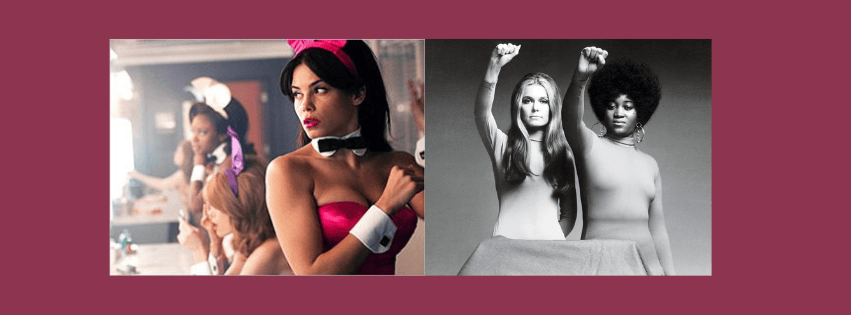
In 1963, an advertisement promised young women an exciting new life at the Playboy Club: glamour, celebrities, and $200–$300 a week.
Gloria Steinem was 28 years old and already struggling to be taken seriously as a journalist. So when Show magazine asked her to investigate the club, she did something extraordinary: she went undercover.
Using the name Marie Ochs, borrowed from her grandmother, Steinem became a Playboy Bunny.
What she discovered behind the glamorous image was very different from the fantasy being sold.
Before she could even start working, she was subjected to a costume fitting designed to create the Playboy ideal of the female body. Then came Bunny School, where women were taught how to walk, serve drinks, behave around customers and follow an elaborate set of rules.
Most shocking of all were the medical examinations. Bunnies were required to undergo gynecological examinations and blood tests, which were presented as legal requirements. Steinem discovered that they were actually Playboy’s own rules.
For eleven days, she lived the life of a Bunny. She experienced the exhausting hours, uncomfortable costumes, strict supervision and unwanted attention from customers. She also discovered that the impressive earnings advertised to women did not necessarily match what they actually experienced at work.
Then she wrote about it.
Published in two parts in Show magazine in May and June 1963, “A Bunny’s Tale” exposed the reality behind one of America’s most glamorous brands.
The article caused a sensation. Playboy disputed Steinem’s portrayal, but the investigation had consequences. After its publication, Hugh Hefner ordered Playboy Clubs to stop requiring gynecological examinations and blood tests for new Bunnies.
But there was another price.
Instead of opening doors for Steinem as a serious journalist, the story made editors see her as the woman who had been a Bunny. She was offered more assignments involving disguises, sex and spectacle rather than serious reporting (oh gosh, if you thought stupidity was a modern thing…).
For a while, she wondered whether the investigation had damaged her career.
It hadn’t.
It had revealed something much bigger than the working conditions inside a Playboy Club. It showed how easily women’s bodies could be turned into a product, while the women themselves were expected to smile, obey and remain grateful for the opportunity.
Steinem would go on to become one of the defining voices of the feminist movement, co-found Ms. magazine and fight for women’s reproductive rights, political representation and equal treatment under the law.
But the Bunny story came first.
At 28, she put on the costume, walked into the fantasy and looked behind it.
The costume faded. The evidence didn’t.
 POSITIVE SOCIAL IMPACT - Where Growth & Soulful collaborations happen