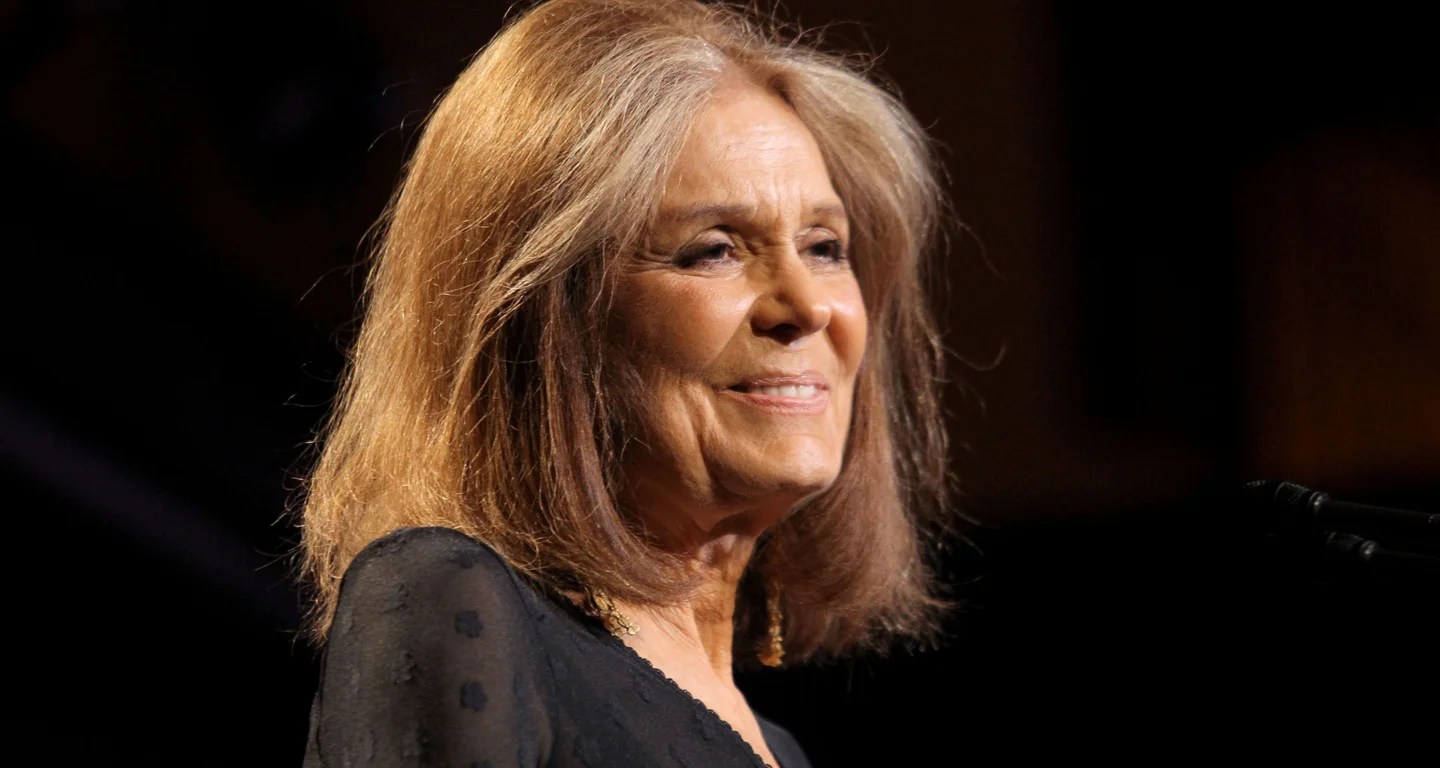
A few days ago, we lost Gloria Steinem, one of the most influential feminist voices of the 20th and 21st centuries.
For decades, she challenged ideas that many people had simply accepted as normal:
- that women should depend on men,
- that motherhood was their natural destiny,
- that their bodies and sexuality could be controlled by others,
- and that equality could wait.
Gloria Steinem spent her life insisting that women were NOT born to fulfill a role designed for them by society.
They were individuals, capable of deciding who they wanted to become.
Her feminism was never about telling women that there was one correct way to live. It was about making sure that women had the freedom to make genuine choices.
- She fought for reproductive rights, equal opportunities, political representation and women’s independence.
- She co-founded Ms. magazine and became one of the most recognizable voices of the women’s liberation movement.
- She also became a powerful advocate for the Equal Rights Amendment, known as the ERA.
The ERA represented something fundamental in her vision of equality: women should not have to depend on the goodwill of those in power in order to be treated equally. Equality needed to be protected by law.
The amendment became one of the great battles of the feminist movement. Although the ERA did not achieve the final constitutional recognition that many activists had hoped for, Gloria continued to support the struggle because she understood that women’s rights were never something that could simply be taken for granted.
Rights that are not protected can always be challenged again.
How Gloria Steinem talked about not having children
Perhaps one of the most personal and powerful aspects of Gloria Steinem’s life was the way she spoke about not having children.
In a world where women are still regularly asked when they will become mothers — and where those who say they do not want children are often told that they will eventually change their minds — Gloria remained remarkably clear about her own choice.
She said that she had no regrets about not becoming a mother.
I find this particularly powerful because there is a simple idea behind it that society still struggles to understand:
Having the ability to do something does not mean that you are obliged to do it.
A woman may have a womb, but that does not mean motherhood is automatically her destiny.
Not everyone with lungs is expected to become an athlete.
Not everyone with hands is expected to become a painter.
We understand that our bodies give us certain capacities, but we do not usually assume that every capacity must become the purpose of a person’s life.
And yet, when it comes to women and reproduction, the expectation has historically been very different.
A woman who can have children is often expected to want them.
A woman who does not want them is asked to explain herself.
But if everyone is expected to make the same choice,
then it is no longer truly a choice.
This does not mean that motherhood is less valuable. It means that motherhood should be a freely chosen path – in full awareness of what it requires – rather than an obligation imposed on women simply because their bodies are capable of reproduction.
Once we will accept this as a collective, there will simply be less regretful mothers and less children who feel deeply in their bones they are not truly wanted because no one has the true capacity to cherish them the way they deserve.
Capacities for motherhood should also be heavily discussed beforehand as not everyone who wants them has the capacity to raise them. I’ve seen too many parents who wanted children as some sort of traumatic response to life, only to realize once they were here that they wanted kids to fulfill something within themselves that the kid is, in reality, never here to bring. Children never come for you, they only come for themselves and a parent is just a guardian of their heart and soul and this requires a very deep and lifelong internal work, but how many parents truly commit to this?
She walked her talk
Gloria Steinem’s life was proof that a woman could live fully, passionately and meaningfully outside the traditional expectations imposed upon her.
She travelled. She wrote. She investigated. She organized. She fought. She created. She changed the public conversation around women’s bodies, work, independence and freedom.
And she did so at a time when women who spoke too loudly, demanded too much or refused to behave as expected were often dismissed, ridiculed or attacked.
She understood that feminism was not simply about allowing women to participate in a world built by men.
It was also about questioning the world itself:
- Why should women be economically dependent on men?
- Why should marriage determine a woman’s social value?
- Why should motherhood be treated as the natural destination of every woman?
- Why should women have less control over their own bodies than governments, husbands or institutions?
These questions were radical when Gloria Steinem began asking them publicly. Some still are.
That is perhaps what makes her legacy so important today.
We often look at women like Gloria Steinem and imagine that their battles belong to the past. But many of the issues she fought against are still present in different forms.
- Women are still expected to justify their decisions about marriage and motherhood.
- Their bodies remain political territory.
- Their rights can still be questioned, restricted or taken away.
The language may have evolved. But the pressure has not disappeared.
Gloria Steinem did not fight so that every woman would live like her.
She fought so that women could decide for themselves.
Some women will want marriage and children. Some will not.
Some will want careers. Some will want to travel. Some will want all of these things.
Some will choose an entirely different life.
The point was never to replace one model of womanhood with another.
The point was freedom.
And perhaps that is the most meaningful tribute we can pay to Gloria Steinem today.
To continue defending the principle she spent her life fighting for:
No woman should have to live a life simply because someone else decided that it was the life she was supposed to want.
Thank you, Gloria, for asking uncomfortable questions.
Thank you for refusing to accept the roles women were given.
Thank you for fighting for the right to choose.
And thank you for reminding us that freedom is not about making everyone live the same way.
Freedom is having the possibility to decide who you are
and what you want to do with the life you have been given.
And to recognize that when you were born,
the Universe had already given you
the Capacity to Wholeness on your own
You were whole the whole time and you’ve always been, you’ve just forgotten and maybe your path here is not to heal, but just to remember…
How Free & Loved you already are!
 POSITIVE SOCIAL IMPACT - Where Growth & Soulful collaborations happen