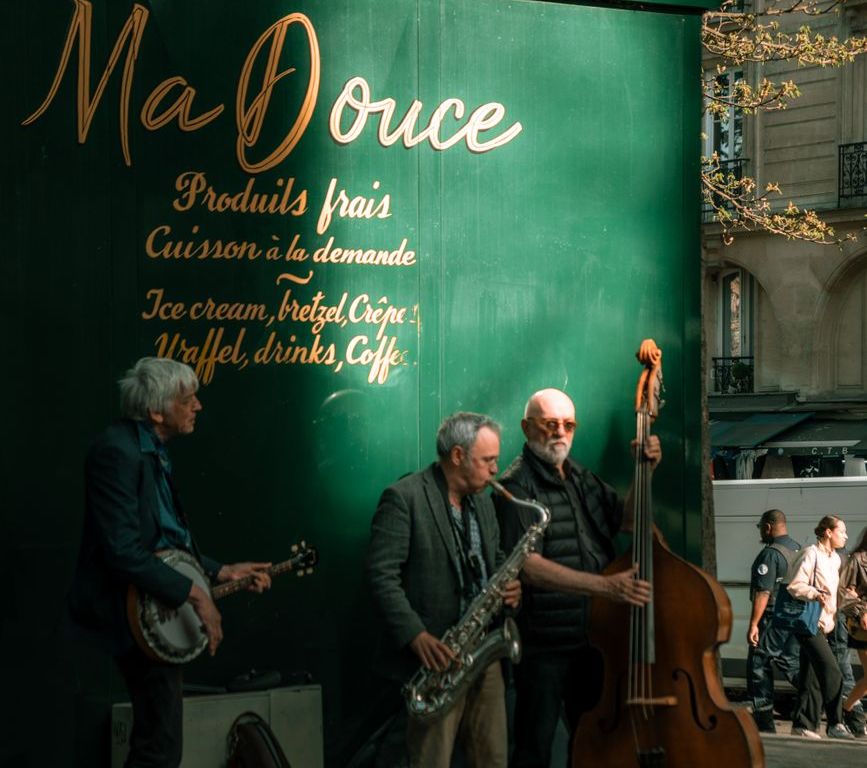
Dansons : When French Becomes a Language of Freedom
Learning French is not only about understanding everyday conversations.
At an advanced level, French becomes a way to explore ideas, emotions and imagination.
Songs are one of the best ways to discover the soul of a language. They reveal expressions, metaphors and rhythms that you rarely find in traditional textbooks.
In this lesson, we explore “Dansons” by Céline Dion, a poetic song about movement, resilience and human connection.
The central idea?
Sometimes dancing is not just an activity.
Sometimes dancing means continuing to move forward, even when life feels uncertain.
Start Learning with a Native French Tutor
1. Vocabulary: The Language of Movement
Danser = to dance
Present tense:
Je danse
I dance
Tu danses
You dance
Nous dansons
We dance
Examples:
J’aime danser.
I love dancing.
Nous dansons ensemble.
We dance together.
Voler = to fly
The verb voler has two meanings:
- to fly
- to steal
Examples:
Les oiseaux volent dans le ciel.
Birds fly in the sky.
Je rêve de voler.
I dream of flying.
In poetry, flying often represents freedom.
2. Vocabulary: The Body and Connection
Music often uses the body to express emotions.
The body
Le corps = the body
Plural:
Les corps = the bodies
Les mains = the hands
Les bras = the arms
Le visage = the face
Plural:
Les visages = the faces
Expressions:
Main dans la main
Hand in hand
Face à face
Face to face
Toi et moi
You and me
Pronunciation:
Toi → “toa”
Moi → “moa”
3. Describing Position and Movement
Useful everyday expressions:
Je suis debout.
I am standing.
Je suis assise.
I am sitting down.
Vocabulary:
Debout = standing
Assis / assise = sitting
Examples:
Je suis debout devant la fenêtre.
I am standing in front of the window.
Je suis assise sur une chaise.
I am sitting on a chair.
4. Understanding French Metaphors
Advanced French often uses images instead of direct explanations.
Le monde vacille
Literally:
“The world shakes.”
Meaning:
The world feels unstable or uncertain.
Vocabulary:
Le monde = the world
Quand = when
Vaciller = to wobble / shake
Example:
Quand le monde vacille, il faut garder espoir.
When the world feels unstable, we must keep hope.
Un pas en avant
Literally:
“One step forward.”
Meaning:
Progress.
Example:
Chaque petit effort est un pas en avant.
Every small effort is a step forward.
Une île
An island.
But in poetry, an island can represent:
- safety
- peace
- a place to escape
- a personal world
Example:
Cette maison est une île de tranquillité.
This house is an island of peace.
5. Vocabulary of Emotions
Music often talks about overcoming difficulties.
Une peine
A sadness / a pain
Plural:
Des peines
Example:
J’oublie mes peines.
I forget my sadness.
Inutile
Useless
Example:
Cela semble inutile.
That seems useless.
Hostile
Hostile
Example:
Un environnement hostile.
A hostile environment.
6. Grammar Focus: Expressing Purpose
A beautiful structure in French:
Pour + infinitive
Meaning: in order to
Examples:
Je danse pour oublier mes problèmes.
I dance to forget my problems.
J’apprends le français pour voyager.
I learn French to travel.
Je crée pour partager mes idées.
I create to share my ideas.
7. Grammar Focus: Because
Parce que = because
Examples:
J’apprends le français parce que j’aime la culture française.
I learn French because I love French culture.
Je danse parce que je suis heureuse.
I dance because I am happy.
8. Discussion Questions (B2/C1)
Answer in full sentences:
1. Pourquoi pensez-vous que la danse est utilisée comme une métaphore dans cette chanson ?
Why do you think dance is used as a metaphor in this song?
2. Est-ce que l’art peut aider les personnes pendant les périodes difficiles ?
Can art help people during difficult times?
3. Qu’est-ce qui vous donne de la force quand le monde semble incertain ?
What gives you strength when the world feels uncertain?
4. Pour vous, qu’est-ce qu’un “pas en avant” dans la vie ?
For you, what is a step forward in life?
Creative Writing Challenge
Write a short poetic paragraph beginning with:
Je danse…
Include:
- a place
- an emotion
- a dream
- a reason
Example:
Je danse dans un monde rempli de possibilités. Je danse pour créer, pour aimer et pour avancer malgré les difficultés.
Why learn French through songs?
Because a language is not only made of words.
It is made of:
- emotions
- images
- memories
- sounds
- stories
When you understand a French song, you do not just understand the lyrics.
You enter another way of seeing the world.
Start Learning with a Native French Tutor

