There was this group I was part of for several months in France. A group made of people in their thirties. Interested in traveling, I think that’s how we initially gathered.
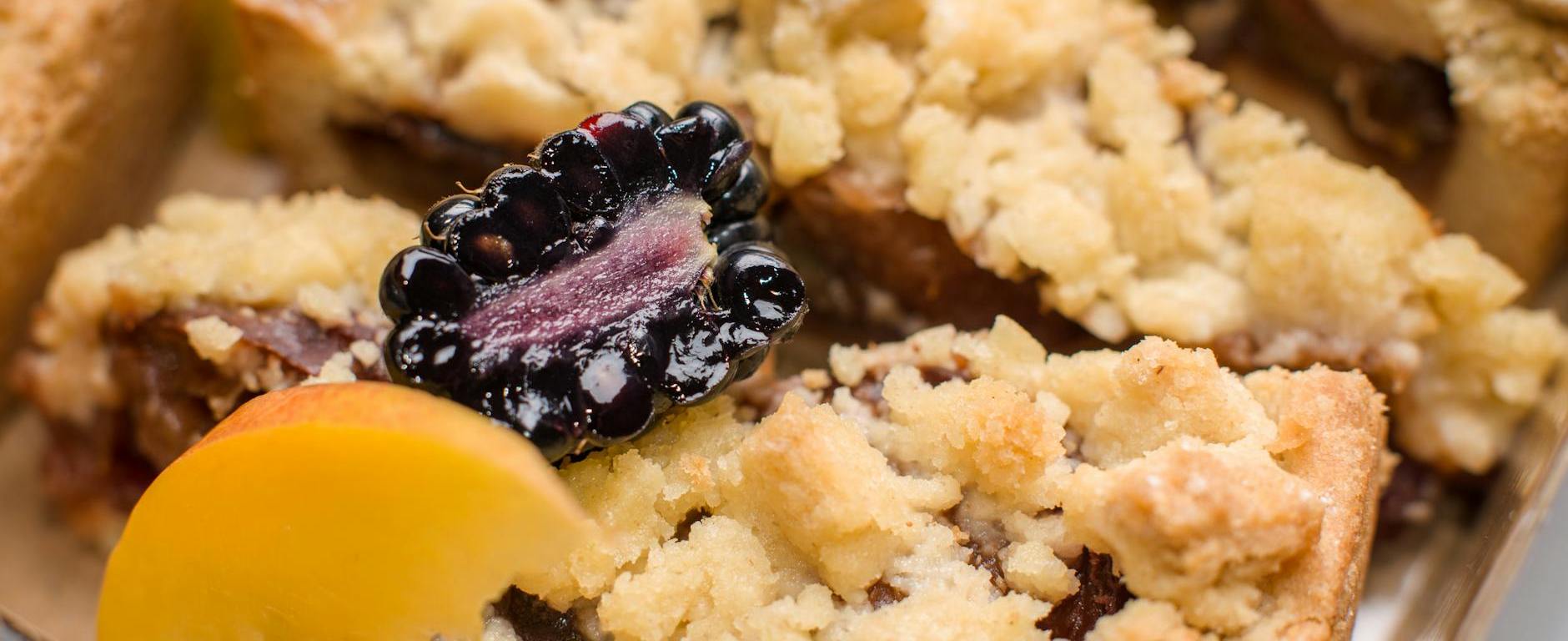
We were organizing dinner parties and for one of them I said I would bring a dessert. I was living on budget at that time and went to buy nice ingredients to prepare a top notch fruits crumble. I felt like I put lots of heart in my recipe and it was actually good.
The only thing is that, its appearance got a bit messy. Maybe because of the transportation. But the taste was great.
After dinner, we all sat down and started to have my dessert.
A first joke was made about it. Its appearance. Then, someone else said something else. Once or twice was ok. But then it lasted for 1 or 2 hours, when they were making fun of my dessert.
I felt pain in my heart, I thought: « I’ve taken some of my money to go and buy the nice ingredients, I prepared it with lots of love, I cooked for them, I don’t deserve that. » Anyway, I went home, a bit disappointed but then, I moved on…
A few weeks passed and another party got organized. A barbecue this time.
A girl who had made fun of my dessert made one and I ended up being sat next to one of her friends who joined us for the occasion. And he started to make jokes about her desserts. Too bad.
On a little tipsy silly note, I responded. And we started to enter that state of joking a million times about something that is not even that funny, but that would be the object of our brains trying to create something that would make us laugh.
What got me a shock, and it made me cry a lot a few days later, was the people’s reactions to this scene of me, laughing with silly jokes about that dessert. Suddenly it had become a crime. Weren’t they doing the exact same thing a few weeks before? Why was it funny back then and why was it a crime that night?
They got annoyed by the scene of me laughing about the dessert with her friend. And it felt like a million times worse betrayal than the original scene.
What was this double standard about exactly? Why was it so easy and comfortable to do this to me, while it was so reproachable to have this done to this other girl?
Was it because she was dating the hot guy? It seemed like there was some kind of admiration that had spread around her. I was finding her pretty mediocre in many ways but this wasn’t the group view upon her.
So she was liked. She had won the validation and power battle within the group. Apparently, I had not. Maybe I was an easy doormat, someone easy to hurt and to think it was right to do so. And she had won a different place. But based on what?
Point out to this scene as « bad » was so unfair. Double standards that are never right and always reveal much deeper issues.
What I learnt about Group Dynamics
I wrote the previous story into Chat GPT and asked to bring me some feedbacks on it from the lens of group dynamics and here’s what it said:
“What stands out in your story is that the real wound was not the jokes themselves. It was the sudden discovery that the rules were not the same for everyone.
You accepted the first scene almost as “group humor,” even if it hurt. But the second scene exposed something deeper: the group was not reacting to the behavior itself. They were reacting to who was allowed to do it, to whom, and within what social hierarchy.
A few interesting dynamics appear in what you describe:
- In many groups, teasing is not only humor. It is also a way people unconsciously establish rank, alliances, and social safety.
- Certain people become “safe targets.” Others become protected figures.
- Once someone is collectively perceived as valuable, desirable, admired, socially central, or romantically connected to status, the group often becomes more defensive of them.
- The exact same behavior can suddenly become “mean,” “inappropriate,” or “crossing a line” depending on who receives it.
What is striking is that you only fully saw the injustice once the roles reversed. That reversal revealed the hidden structure of the group.
Another interesting point is that groups often rewrite reality afterward. The first scene was normalized as “just joking.” The second became morally charged. That inconsistency creates a very destabilizing feeling because humans expect social rules to be coherent. When they are not, it creates a sense of betrayal and confusion.
There is also something important in your intuition about admiration and desirability. Groups are often far less merit-based than people think. Social protection is not always granted according to kindness, integrity, intelligence, or fairness. Sometimes it comes from:
- attractiveness,
- charisma,
- social confidence,
- a professional status,
- romantic association,
- emotional dominance,
- conformity to the group culture.
And people frequently defend those they unconsciously fear losing status with.
Another layer is that when someone occupies the “easy target” position in a group, people can stop fully perceiving their emotional reality. The person becomes a social function more than an equal emotional being. That’s why people can participate in things they would consider cruel if directed at someone they value more highly.
What probably hurt so deeply is that the second event shattered the illusion that the first one had been innocent. It revealed intentional or unconscious inequality in empathy.
And often, once you see that clearly, staying in the group becomes psychologically impossible because the atmosphere no longer feels emotionally safe or honest.”
I wrote this article after dreaming about this scene again
When you have enough time and space to dream, your subconscious mind brings up all the unresolved stories you’re still carrying. It will try to bring them back up to the surface for you to process them again, maybe more deeply or through a new lens. So I’m going to write more paragraphs to try to make sense of this:
I’d say that what felt traumatizing was the sensation of having lived some events on one level while a parallel reality I could have never imagined was actually controlling the whole situation and relationship dynamics. It felt like a huge loss of control and a brutally shattered illusion. Like if there wasn’t any relationship at all in the end, and I was only a pawn in the middle of a systemic game where nothing was guided by fairness. I’m sure many of you can relate to that, right?
I’m not sure about what creates the trauma exactly. But certainly that feeling of a sudden gap between what you thought was true VS what actually got revealed. Like if you were thinking you were walking on a safe road and suddenly ended up at the edge of a cliff. It left me in so much pain the day after this happened. It felt like a deep social betrayal, and like nothing was logical in the game so I couldn’t trust anyone.
Later on, I’ve learnt that there is a logic to those group dynamics, it’s just that it’s not my logic at all. It’s actually all I hate, a mix of brainless power games and appearances while I only look for deep soft skills in people. But whether you like it or not, those dynamics are pretty common situations and they will often happen wherever you go.
Finding it hard to find my tribe in this world, at some point, I just wondered: « who and when are people finally gonna be fair to me? » and « what am I going to be able to build otherwise? » , « can you do it all on your own? » « aren’t we social creatures? » …
Looking for Fair Humans
We need to find people we can finally enjoy yourself around. Many of us will give up and I don’t blame them. But recently someone pointed out to me that I had given up. It was not good to hear it because it doesn’t sound like me. It sounded more like a wounded version of me. Emilie, giving up? No way, I’m the most determined person in the world! And I never give up unless I’m dead. I always heal and rise, no matter what’s happened. And given that the deepest gifts are also hidden in dark places, there’s nothing to be scared about anymore. There’s always something to learn from, in every situation. And in the end, it doesn’t matter that much. You’ll walk, accompanied or alone, and either way will make you find your way out into even more light and let this be your way to stick out your tongue.
Being positive
Being positive looks a lot like that in the real world. Living in an era when most people have very damaged souls and auras, the game of living has become more about learning how to surf the waves and enjoy the ride anyway. And trust that there will always be a new wave coming, a better one. You’ve got to trust this for sure. You’ve got to trust your path even when it doesn’t look the way you want it to look yet. This is where deeper trust in the universe is being built. Like Jesus said in « The chosen » to one of his followers: « stop being anxious ». When the sky is unclear, you need to remember that the universe doesn’t make mistakes and you are able and asked to elevate yourself beyond your initial perceptions.
Emi

