She fell in love with a man who would not have her. So she married his twin brother, sailed alone to a continent she had never seen, built a farm that was never meant to survive, buried the second man she loved in the hills above it, lost everything she had spent seventeen years building, went home to her childhood bedroom, and wrote one of the most beautiful books in the English language about all of it.
Her name was Karen Dinesen. The world would come to know her as Isak Dinesen. And her story begins, as the best ones often do, with wanting something she could not have.
She was 27 years old when she fell for Hans von Blixen Finecke, a Swedish baron with the kind of easy magnetism that made a person feel chosen simply because he looked at them. He did not love her back. That door closed quietly and completely, the way such doors do, leaving nothing to argue with.
His identical twin brother was named Bror.
If Hans was the kind of man you admired from a careful distance, Bror was the kind of man who made standing still feel like surrender. He was restless and charming and always pointed toward the horizon. He could not offer devotion. But he offered something that, in that moment, Karen needed more. He offered escape.
Together they made a plan. They would leave Denmark behind. They would go to British East Africa and start a coffee plantation in the highlands of what is now Kenya. It was the kind of plan that sounds like adventure from far away and looks like recklessness when seen up close, which is usually a sign that someone is making a choice with their whole self and not only the careful part.
In December 1913, Karen sailed alone toward a continent she had never visited. On January 14, 1914, she stepped off the ship in Mombasa and married Bror that same day. She became Baroness Blixen before she had set foot on the land that would define the rest of her life.
The farm lay beneath the Ngong Hills, acres of highland where the air came thin and clean and the evenings turned everything violet at the edges. She named the house Mbogani, house in the woods. From a distance, in that light, it must have looked exactly like the beginning of something.
Within a year, the dream had already begun to cost her more than she had planned for.
Bror’s infidelities, carried out with very little effort to hide them, had left her with syphilis. It was an illness that would shadow her health for the rest of her life, damaging her nervous system slowly and permanently. He continued his affairs and his disappearances with the calm ease of someone who had never really meant to be faithful, vanishing for weeks at a time while she struggled alone to keep the farm solvent. They separated in 1921 and divorced in 1925.
She did not leave.
Something had happened to her in the space between the long mornings in the fields and the quiet evenings under an enormous African sky, and she could not undo it by simply buying a return ticket. She had learned Swahili. She walked the plantation at dawn with the Kikuyu workers she employed, listened to their disputes, cared for the sick, helped educate their children. They called her Msabu. She had become, in some way that neither she nor they could fully explain, someone who belonged there.
The farm was always failing. The altitude was wrong for coffee. Drought came. Locusts came. Prices dropped. She invested everything she had, money and energy and the hard pride of someone who had decided that giving up was not an option, into a crop that refused to flourish. But the struggle gave her something she had never had in Denmark. Independence. The feeling that her life was entirely her own.
Then Denys Finch Hatton arrived.
He had been educated at Eton and Oxford. He hunted big game and quoted poetry from memory beside fires in the dark. He was thoughtful where Bror had been impulsive, deliberate where Bror had been careless. He loved the wilderness with a depth that Karen recognised at once because she had grown to love it too.
But Denys would not be owned by anything or anyone. He arrived when he wished in his small yellow Gypsy Moth plane and left just as freely. He would not marry her. He would not settle permanently. The relationship lived in the space between his arrivals and his departures, and Karen lived in that space with a mixture of joy and ache that she would spend years trying to describe properly.
They read Homer and Shelley together on the veranda. They flew above the Rift Valley, watching herds move like slow shadows across the plains far below. He treated her as an intellectual equal at a time when that was not a common thing for a man to do with a woman, and she recognised that gift for what it was.
A love built on freedom has no guarantees.
On May 14, 1931, Denys took off from Voi in his Gypsy Moth. The plane faltered almost immediately after leaving the ground and crashed. He died at the scene.
Karen buried him in the Ngong Hills, in a place they had once chosen together during one of their flights above the plains. An obelisk was placed at the grave with a line from Coleridge that Denys had loved. He prayeth well who loveth well both man and bird and beast.
Three weeks later, the coffee market collapsed entirely. The farm, already failing, held up by loans and the kind of hope that had stopped listening to evidence, was foreclosed. Seventeen years of her life were sold away acre by acre in a matter of weeks.
She was 46 years old. She was ill. She was bankrupt. The man she had loved was in the ground in the hills above a farm that no longer belonged to her. She boarded a ship and went home to Denmark with almost nothing.
Back in her childhood bedroom, in the house where she had once been a young woman dreaming of escape, she began to write.
She wrote in English rather than Danish, perhaps needing the distance of another language to look at her past without flinching. She did not try to explain Africa. She tried to preserve it, the slant of light at dawn, the hush before the rains, the specific dignity of the people who had shaped her days. She wrote about Denys without sentimentality. She wrote about loss without asking for sympathy. She wrote about loving a place that could never truly be hers in the way she had wanted it to be.
Publishers turned her away at first. The manuscript seemed too loose, too interior, too lacking in conventional plot. But in 1937, Out of Africa was published under the name Isak Dinesen.
Its first line became one of the most recognised opening sentences in modern literature.
I had a farm in Africa, at the foot of the Ngong Hills.
Past tense. A farewell dressed as an opening. A woman describing something already gone in the very first breath of the book.
The novel found readers everywhere and continued to find them across generations. Karen Blixen went on to write more celebrated work and was nominated for the Nobel Prize in Literature twice. When Ernest Hemingway accepted his own Nobel Prize in 1954, he said publicly that the prize should have gone to that beautiful writer Isak Dinesen.
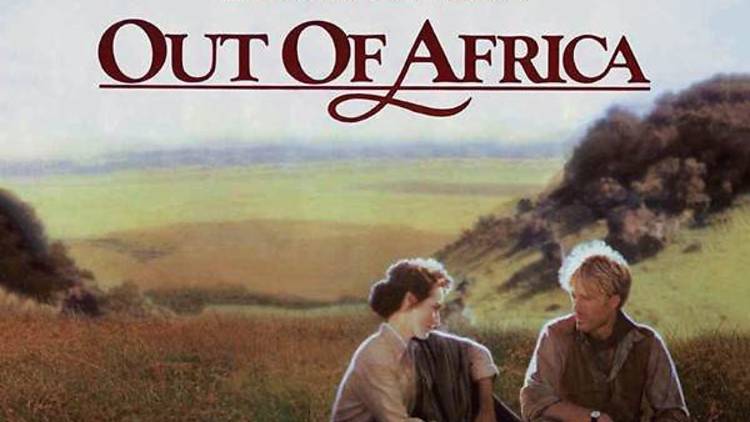
In 1985, the book was adapted into a film starring Meryl Streep and Robert Redford that won seven Academy Awards including Best Picture. Millions of people who had never read the novel met her story through the screen, though the screen, as screens always do, could not hold all the quiet weight of the original pages.
Karen Blixen died on September 7, 1962. She was 77 years old. She never returned to Kenya.
She had gone to Africa looking for escape from a life that felt too small. She had found something immeasurably larger and lost it in almost every way a person can lose something. And then she had gone home and written it all down so carefully, so precisely, so completely, that what she lost could never entirely disappear.
Five words at the beginning of a book that has outlasted everything else.
I had a farm in Africa.
 POSITIVE SOCIAL IMPACT - Where Growth & Soulful collaborations happen