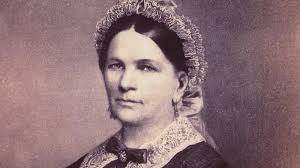
Sophia Smith sat in the farmhouse where she’d lived her entire sixty-four years, suddenly facing a question no woman of her generation had the power to ask:
What do I do with a fortune of my own?
She was the last one left.
Her father, Joseph Smith, a prosperous farmer, had died in 1836 leaving substantial wealth to his children. Her sister Harriet died in 1859. Her brother Austin—a shrewd investor who’d multiplied his inheritance into a genuine fortune—died earlier that year.
Sophia, who had never married, inherited everything. Nearly $400,000. The equivalent of roughly $12 million today.
She was sixty-five years old. She’d been deaf since her forties. And she was suddenly one of the wealthiest women in New England.
Society had very clear expectations for unmarried women with money in 1861:
Make a few polite donations to churches and charities. Leave the bulk to male relatives—nephews, cousins, anyone with the family name. Die quietly. Be remembered as generous but unremarkable.
Women couldn’t vote. Couldn’t serve on boards. Couldn’t attend universities. Weren’t expected to think beyond the narrow margins society had drawn for them.
But Sophia Smith had spent sixty-five years watching those margins, and she’d grown tired of them.
She’d been an avid reader her entire life—poetry, history, newspapers, political commentary. Her formal education had been minimal: a few terms at the local Hadley school, one year at Hartford Female Seminary when she was sixteen.
She knew exactly what she’d missed. And she knew what every woman was still being denied.
So she turned to her pastor, Reverend John Morton Greene, with a simple question that would change American history:
“How can I make my fortune matter?”
Greene was young, educated at Amherst College, and surprisingly progressive. He suggested several possibilities:
Donate to Amherst College. Support Mount Holyoke Female Seminary, where his wife had studied. Fund a school for the deaf—something Sophia initially favored given her own profound hearing loss.
But in 1867, the Clarke School for the Deaf opened in nearby Northampton. That need was covered. Sophia reconsidered everything.
Then Greene proposed something radical, something that made Sophia’s pulse quicken despite her age:
“Build a college. For women. Not a seminary. Not a finishing school. A real college—one that gives women an education equal to what men receive at Harvard, Yale, and Amherst.”
The idea set fire to something deep inside Sophia.
She’d been told her entire life that women didn’t need higher learning. That their delicate constitutions couldn’t handle rigorous study. That mathematics would damage their reproductive systems. That Latin and Greek were “unfeminine.” That advanced education would make them unmarriageable.
She’d heard these lies for sixty-five years, and she’d never believed a single one.
She’d watched brilliant women—including herself—denied opportunities simply because they were female. She’d seen intelligence wasted, potential crushed, ambition redirected toward marriage and motherhood as if those were the only paths worth walking.
Now she had the power to change that.
For the next two years, Sophia worked meticulously on her will. She consulted lawyers. Refined her vision. Made absolutely certain every word reflected her revolutionary intention.
In March 1870, she finalized it.
Every dollar of her fortune—$387,468—would establish “an institution for the higher education of young women, with the design to furnish them means and facilities for education equal to those which are afforded in our Colleges to young men.”
Not separate. Not softer. Not “appropriate for ladies.”
Equal.
The same Latin. The same Greek. The same mathematics. The same natural sciences. The same philosophy. The same rigorous standards.
Everything men received at Harvard. Everything that had been locked away from women for centuries.
Three months later, on June 12, 1870, Sophia Smith died.
She never saw the campus. Never met a single student. Never knew if her gamble would actually work.
But her will stood firm.
Smith College was chartered by the Massachusetts legislature in 1871. After four years of preparation—buying land, constructing buildings, hiring faculty—it opened its doors in 1875.
14 young women walked through those doors on opening day.
And they studied exactly what Sophia had demanded: the identical curriculum offered to men at the nation’s most prestigious universities.
Critics immediately predicted disaster. Medical experts warned that rigorous study would damage women’s brains, ruin their health, destroy their fertility, and make them hysterical (hahaha!!). Newspapers published concerned editorials. Parents worried their daughters would become unmarriageable bluestockings (good for them).
The students proved them catastrophically wrong.
They excelled in mathematics. They mastered Latin and Greek. They conducted scientific experiments. They wrote philosophy papers. They graduated with honors.
And they didn’t die, go mad, or become infertile. They simply became educated.
Sophia’s timing was perfect. The 1870s marked the beginning of a transformation in American society. If women were going to become doctors, lawyers, scientists, professors, writers, and leaders—and many were determined to do exactly that—they needed access to the same rigorous education men had monopolized.
Smith College became the door they’d been waiting for.
The ripple effects never stopped spreading.
By 1900, Smith had over 1,000 students. By the 1920s, it was recognized as one of the legendary Seven Sisters—the elite women’s colleges that educated generations of American leaders when most universities still excluded women entirely.
The graduates transformed America:
- Betty Friedan, whose 1963 book “The Feminine Mystique” launched the modern women’s movement
- Gloria Steinem, journalist and feminist icon who co-founded Ms. Magazine
- Sylvia Plath, poet whose work continues to haunt and inspire
- Barbara Bush and Nancy Reagan, both First Ladies
- Julia Child, who revolutionized American cooking
- Madeleine L’Engle, whose “A Wrinkle in Time” opened science fiction to girls
And thousands more who shaped law, literature, science, politics, medicine, business, and culture in ways Sophia could never have imagined.
All because one deaf woman from a small Massachusetts town—a woman who’d been denied the education she deserved simply because of her gender—used wealth she couldn’t take with her to build opportunity she’d never live to see.
Her unmarried status, once viewed as a social failure, had given her complete legal control of her fortune. No husband to override her wishes. No sons to inherit automatically.
She turned that “limitation” into a foundation that would educate women for centuries.
Today, Smith College has graduated over 50,000 women. It remains one of the most prestigious liberal arts colleges in America, consistently ranked among the top institutions in the nation.
The Sophia Smith Collection at the college houses one of the largest and most important archives of women’s history in the world—millions of documents preserving the voices of women who refused to be silenced.
And every student who walks through those gates walks on ground Sophia Smith planted in 1870. She couldn’t attend college herself. So she built one.
Not for herself—she’d be dead in three months. Not for immediate gratitude—she’d never hear a single thank you.
For women she’d never meet. For daughters she never had. For a future she could only imagine. She watered that future with her entire life savings and trusted generations she’d never know to make it bloom.
More than 150 years later, they still are. That’s the power of refusing to accept what society says you can’t do. That’s the legacy of turning personal pain into collective possibility. That’s what happens when one woman who was told she didn’t matter decides that future women will.
Sophia Smith never raised her voice. Never marched in protests. Never gave speeches or wrote manifestos.
She just rewrote her will.
And she changed the world.
 POSITIVE SOCIAL IMPACT - Where Growth & Soulful collaborations happen