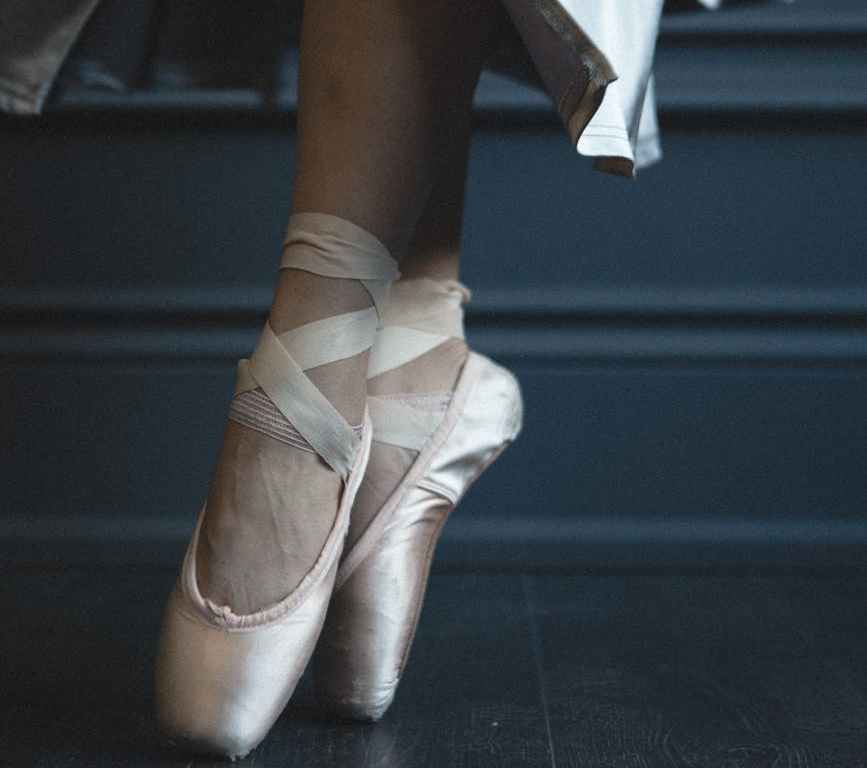
Ballet is not just movement—it’s a language. Step into any studio in the world and you’ll hear instructions in French, the universal vocabulary of ballet. These words carry centuries of artistry, connecting dancers across time and cultures.
For English speakers, understanding the exact meaning of these French terms adds depth to your practice. You don’t just copy movements—you embody them with full awareness of their poetry.
Here is your artistic guide to 50 essential ballet words and expressions in French, with their English translations.
Positions: the Foundations
Ballet begins with stillness, with the placement of the feet and arms:
- Première position – First position
- Deuxième position – Second position
- Troisième position – Third position
- Quatrième position – Fourth position
- Cinquième position – Fifth position
- Bras bas – Arms low (resting position of the arms)
- Port de bras – Carriage of the arms
The Language of the Legs and Feet
Every step tells a story through precision:
- Plié – Bend of the knees
- Relevé – Raised (rising onto the balls of the feet)
- Tendu – Stretched
- Dégagé – Disengaged
- Rond de jambe – Circle of the leg
- Développé – Developed (the leg unfolds)
- Fondu – Melted
- Frappé – Struck
- Battement – Beating action of the leg
- Grand battement – Large beating (a powerful high kick)
Movements Across Space
Ballet travels, glides, and sweeps the floor:
- Glissade – Glide
- Chassé – Chased
- Pas de bourrée – A linking step of small movements
- Balancé – A rocking step, like a waltz
- Pas de chat – Step of the cat (a light, springing jump)
- Coupé – Cut (one foot displaces the other)
Jumps and Elevation
The heartbeat of ballet is in its leaps:
- Sauté – Jumped
- Jeté – Thrown
- Assemblé – Assembled (feet meet in the air)
- Entrechat – Interweaving (feet beating in the air)
- Grand jeté – Big leap, a soaring movement across space
- Temps levé – Time raised (a hop on one foot)
- Tour en l’air – Turn in the air
Grace and Flow
Ballet is not only technique, it is poetry in motion:
- Adagio – Slow, graceful sequence
- Allégro – Bright, lively movement
- Épaulement – Shouldering, the use of the upper body with expression
- Enchaînement – A combination of steps linked together
- Manège – Circular traveling sequence
- Arabesque – A long, elegant line with the leg extended behind
- Attitude – A bent position of the leg, inspired by classical sculpture
Directions and Qualities
Ballet speaks in directions, almost like compass points of artistry:
- En avant – Forward
- En arrière – Backward
- De côté – To the side
- En dedans – Inward
- En dehors – Outward
- En croix – In the shape of a cross (to the front, side, back, side)
Expressions of Elevation and Beauty
The final layer of ballet is expression:
- Penché – Leaning, tilting forward
- Pirouette – Whirl, spin
- Sissonne – A jump that splits the legs in the air
- Fouetté – Whipped (a sharp whipping turn of the body or leg)
- Pas de deux – Step for two (a duet)
- Variation – A solo dance
- Coda – The brilliant finale of a performance
The Poetry of French in Ballet
When you dance these words, you don’t just move—you speak French through your body. Each term carries history, culture, and artistry. By learning their meaning, you step more fully into the tradition and soul of ballet.
And for English speakers, this opens a beautiful possibility: to learn French itself through the art form you already love.
Contact me for Creative French classes
✨ I can guide you on a journey where learning French is not about memorizing rules, but about discovering culture, music, literature, and movement.
Contact me for more information!
 POSITIVE SOCIAL IMPACT - Where Growth & Soulful collaborations happen